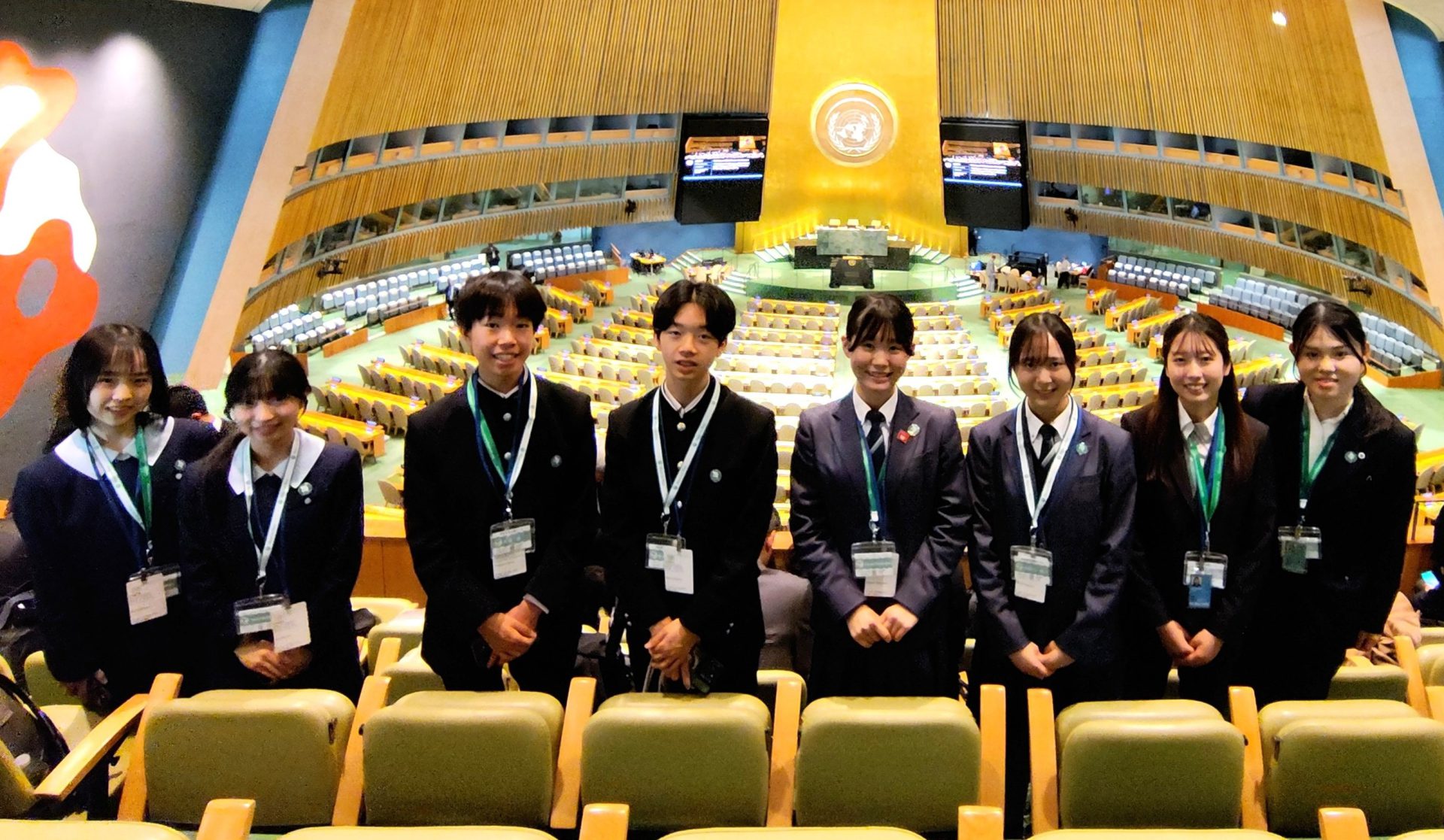
To coincide with the 11th Review Conference of the Treaty on the Non-Proliferation of Nuclear Weapons (NPT), held in New York City, United States, Mayors for Peace dispatched a delegation of high school and university students from Hiroshima who are actively engaged in various peace initiatives as Mayors for Peace Youth. Through a range of activities—including delivering presentations and exchanging ideas at the Mayors for Peace Youth Forum, a side event of the Review Conference; observing conference sessions; presenting petition signatures to UN officials; and interacting with young people involved in peace activities from around the world—the program aimed to foster the next generation of youth leaders who will carry forward peace initiatives in the future.
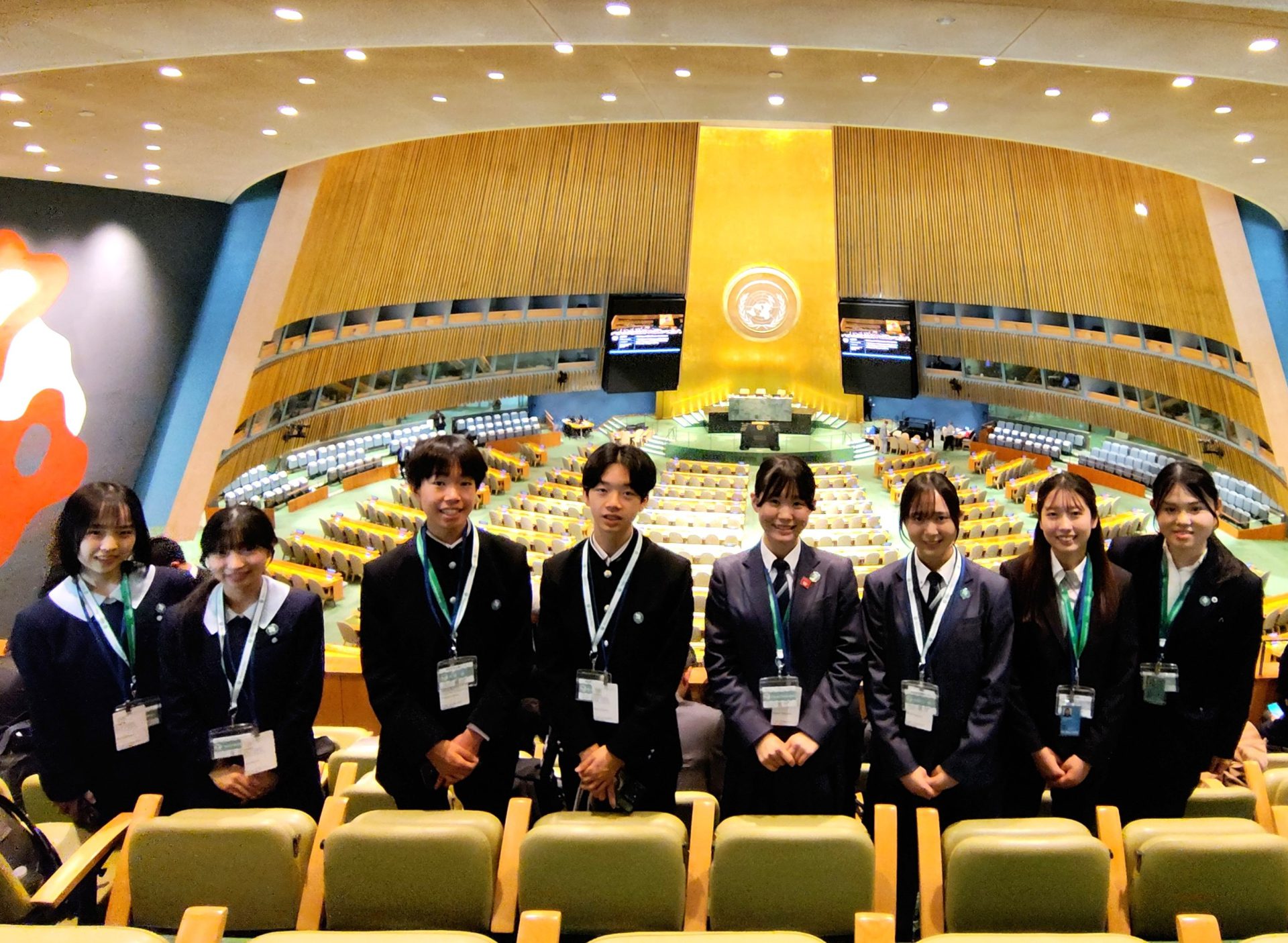
Dates of the Mayors for Peace Youth Delegation: April 26–May 3, 2026
April 27
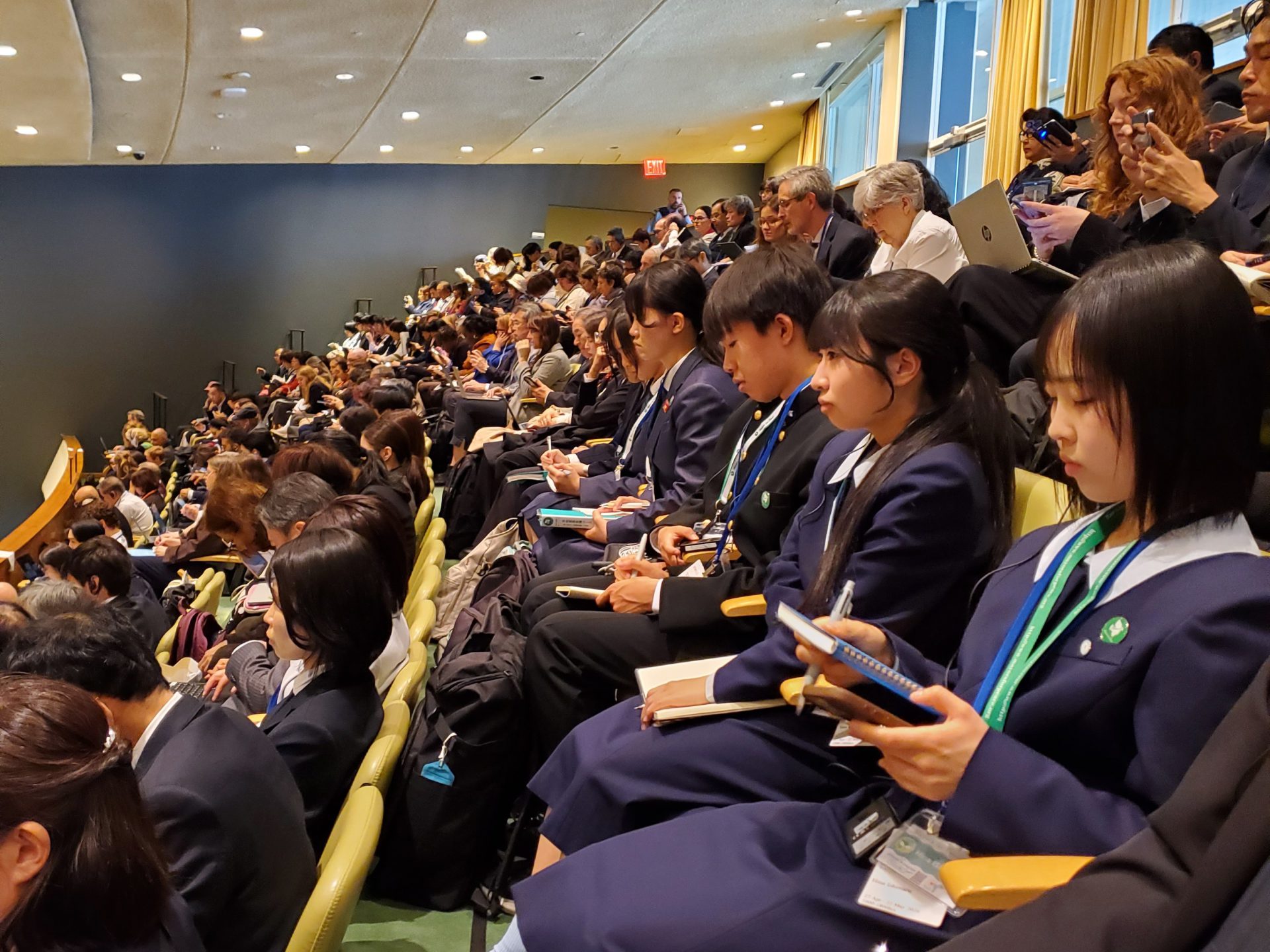
Observing the Opening Session of the 11th NPT Review Conference
At the opening session, following introductory remarks by UN Under-Secretary-General and High Representative for Disarmament Affairs Izumi Nakamitsu, the Conference proceeded with the election of its President and Vice-Presidents, as well as an address by UN Secretary-General António Guterres. During discussions on the election of the Vice-Presidents, delegates from various countries engaged in statements and exchanges of views, reflecting tensions surrounding issues such as nuclear development. Witnessing these proceedings firsthand, the Youth participants gained a deeper understanding of the complex realities of the international community and the challenges of building consensus on nuclear disarmament and non-proliferation, even within the NPT framework—the largest multilateral mechanism addressing these issues, including both nuclear-weapon and non-nuclear-weapon states. At the same time, one participant reflected that “precisely because the international situation is so uncertain and turbulent, this Conference serves as an extremely important forum for dialogue between nuclear-weapon and non-nuclear-weapon states.” Through this experience, the Youth participants further deepened their awareness of the role they themselves can play in advancing peace and nuclear disarmament.
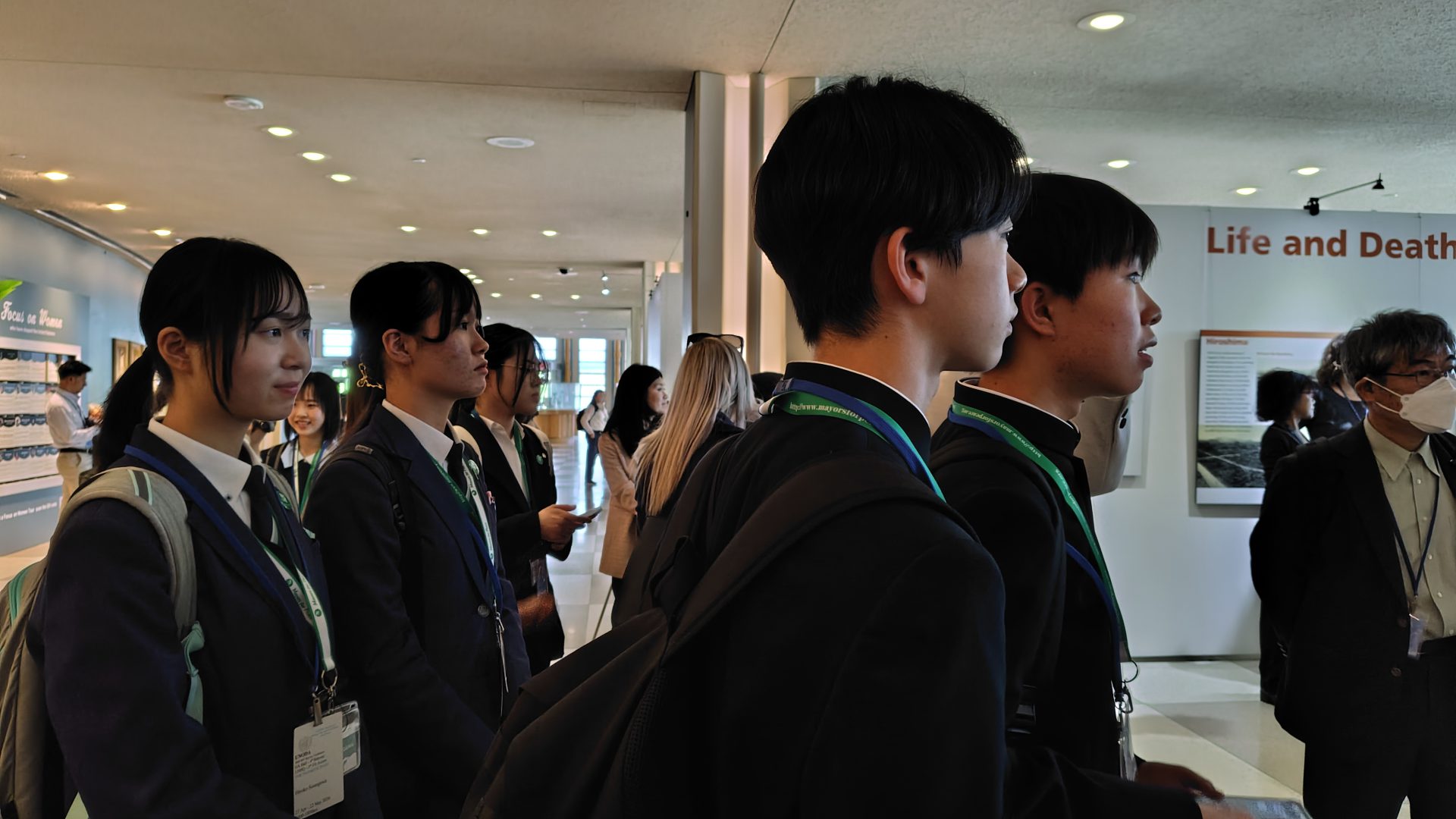
Attendance at the Opening Ceremony of the UN Atomic Bomb Exhibition Hosted by Nihon Hidankyo and Co‑hosted by Hiroshima and Nagasaki
The Youth participants attended the opening ceremony of the UN Atomic Bomb Exhibition held in the Visitors’ Lobby of UN Headquarters. The exhibition was organized to share the experiences of atomic bomb survivors and their wish that “no one should ever suffer the same tragedy again.” This marked the fifth time the exhibition had been held at the United Nations. In his opening remarks, Mayor Matsui emphasized the significance of holding the exhibition during the NPT Review Conference, particularly at a time when the international security environment remains challenging despite Nihon Hidankyo having been awarded the Nobel Peace Prize in 2024. He called on participants to take to heart the realities of the atomic bombings and to deepen discussions on nuclear disarmament. Following the ceremony, the Youth participants reflected on the importance of conveying the realities of the atomic bombings to a wider audience, commenting that the exhibition was “an important opportunity to communicate the horrors of nuclear weapons” and expressing their hope that “many people will have the chance to see it.” Through the exhibition, they renewed their awareness of the importance of sharing the realities of the atomic bombings with people around the world.
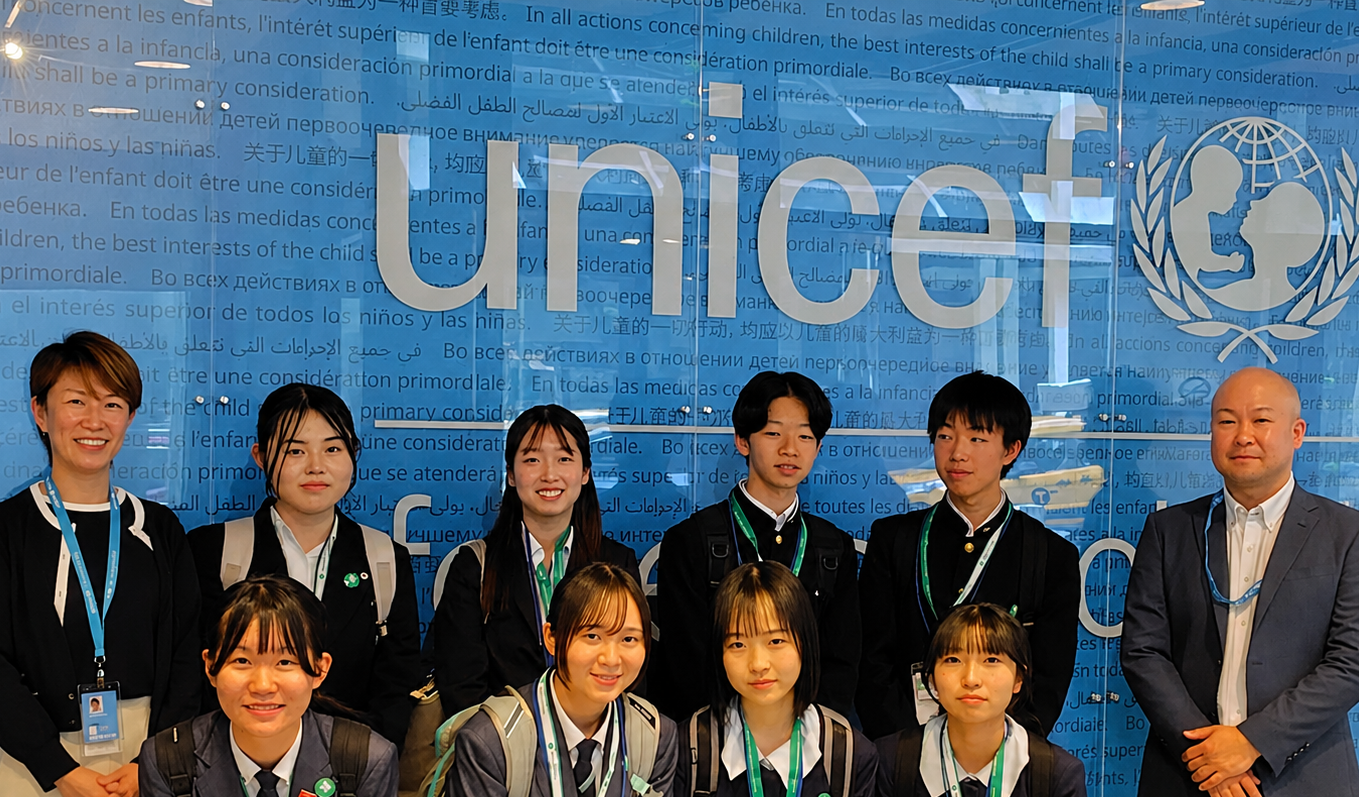
Visit to UNICEF (United Nations Children’s Fund)
The delegation visited UNICEF and received a briefing from Finance Specialist Mr. Kageyama and Public Partnership Officer Ms. Haramoto on UNICEF’s mission, as well as their professional responsibilities and career paths. During the Q&A session, the youth participants asked questions about what inspired them to pursue careers in international organizations and how students should engage with global social issues. In response, the speakers emphasized the importance of maintaining an interest in world affairs, the value of seeing conditions on the ground in different parts of the world while still a student, and the appeal of working in international organizations where people from diverse backgrounds collaborate toward common goals. The visit provided the youth participants with a valuable opportunity to reflect on their future activities and career aspirations.
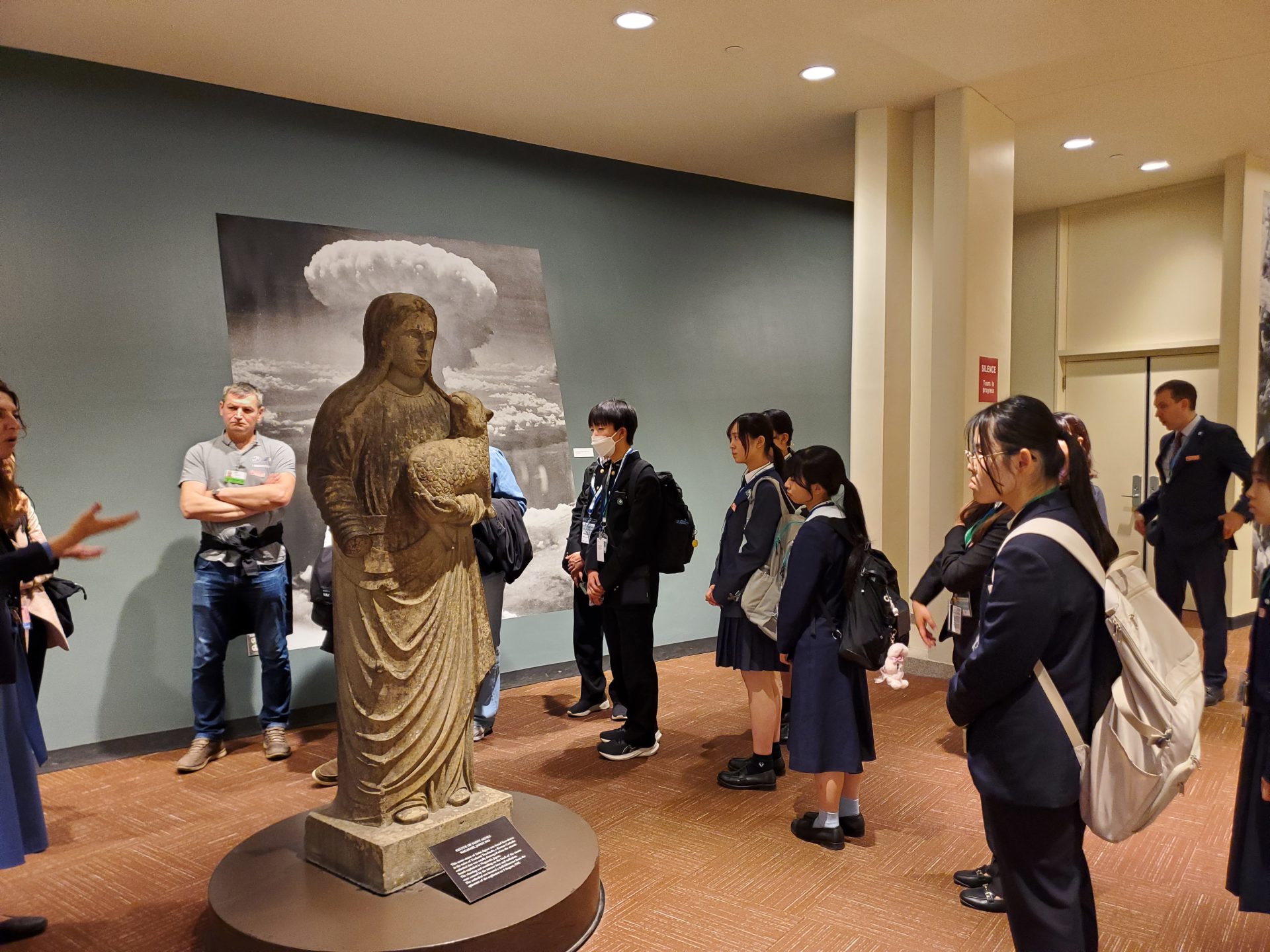
Participation in the United Nations Headquarters Guided Tour
During the guided tour, the youth participants visited various areas of United Nations Headquarters, including the General Assembly Hall, the Economic and Social Council Chamber, the Peace Bell, the Hiroshima and Nagasaki Atomic Bomb Exhibition, and the area displaying gifts presented to the United Nations by Member States. The participants listened attentively to the guide’s explanations, deepening their understanding of how meetings are conducted and consensus is built within the United Nations. The tour also provided them with a valuable opportunity to experience firsthand the atmosphere of United Nations Headquarters, the center of international diplomacy.
April 28
Mayors for Peace Youth Forum
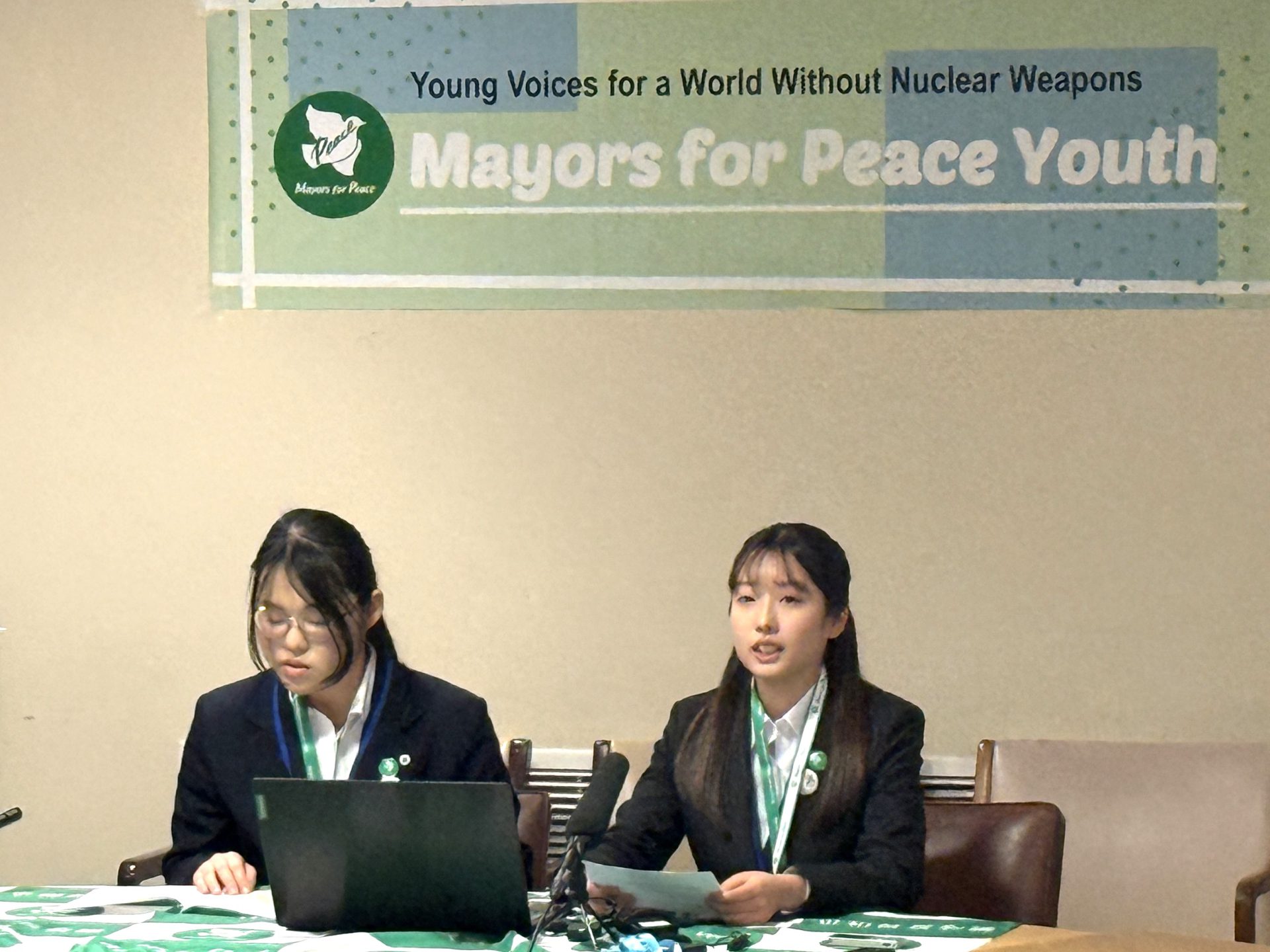
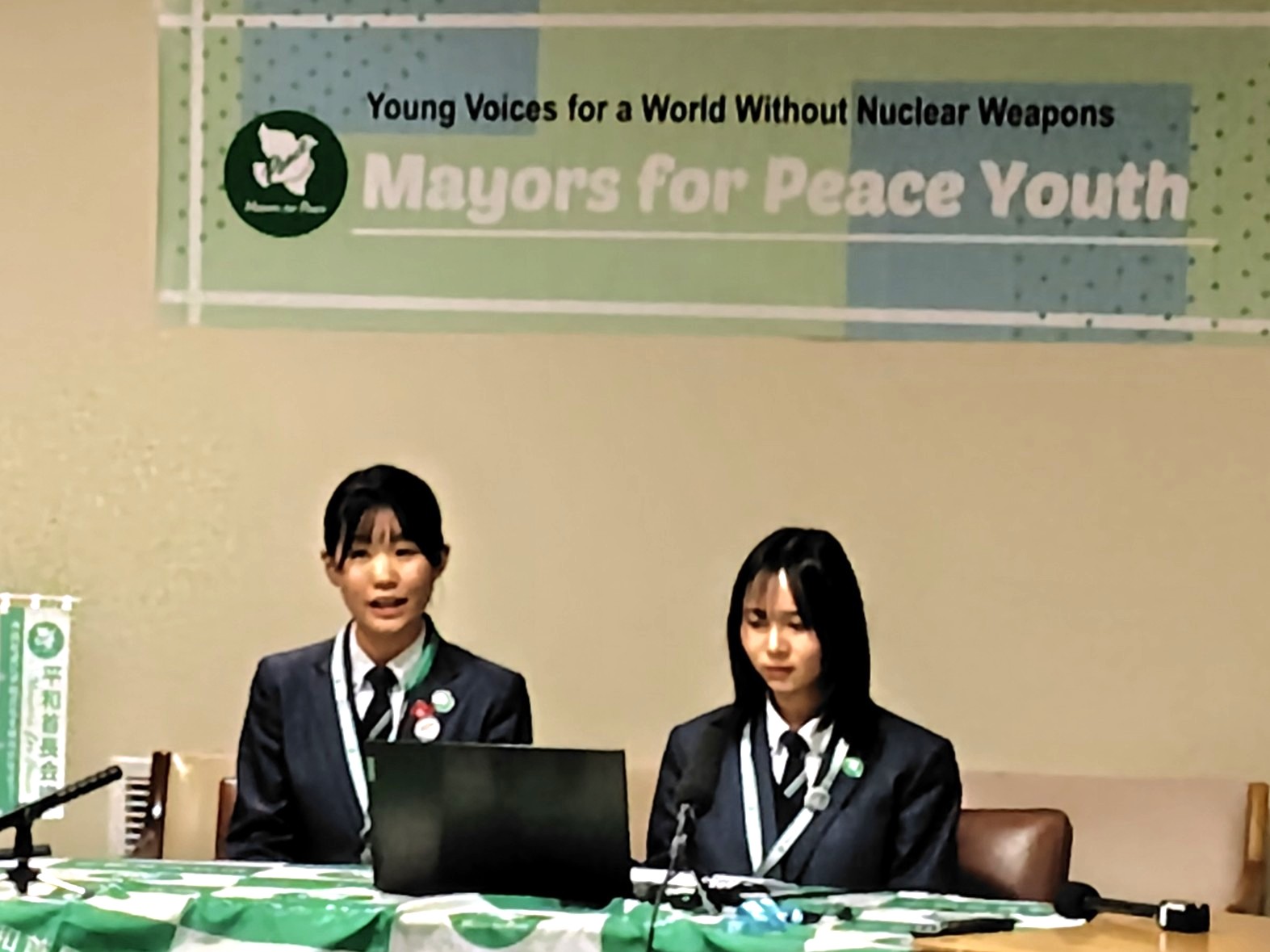
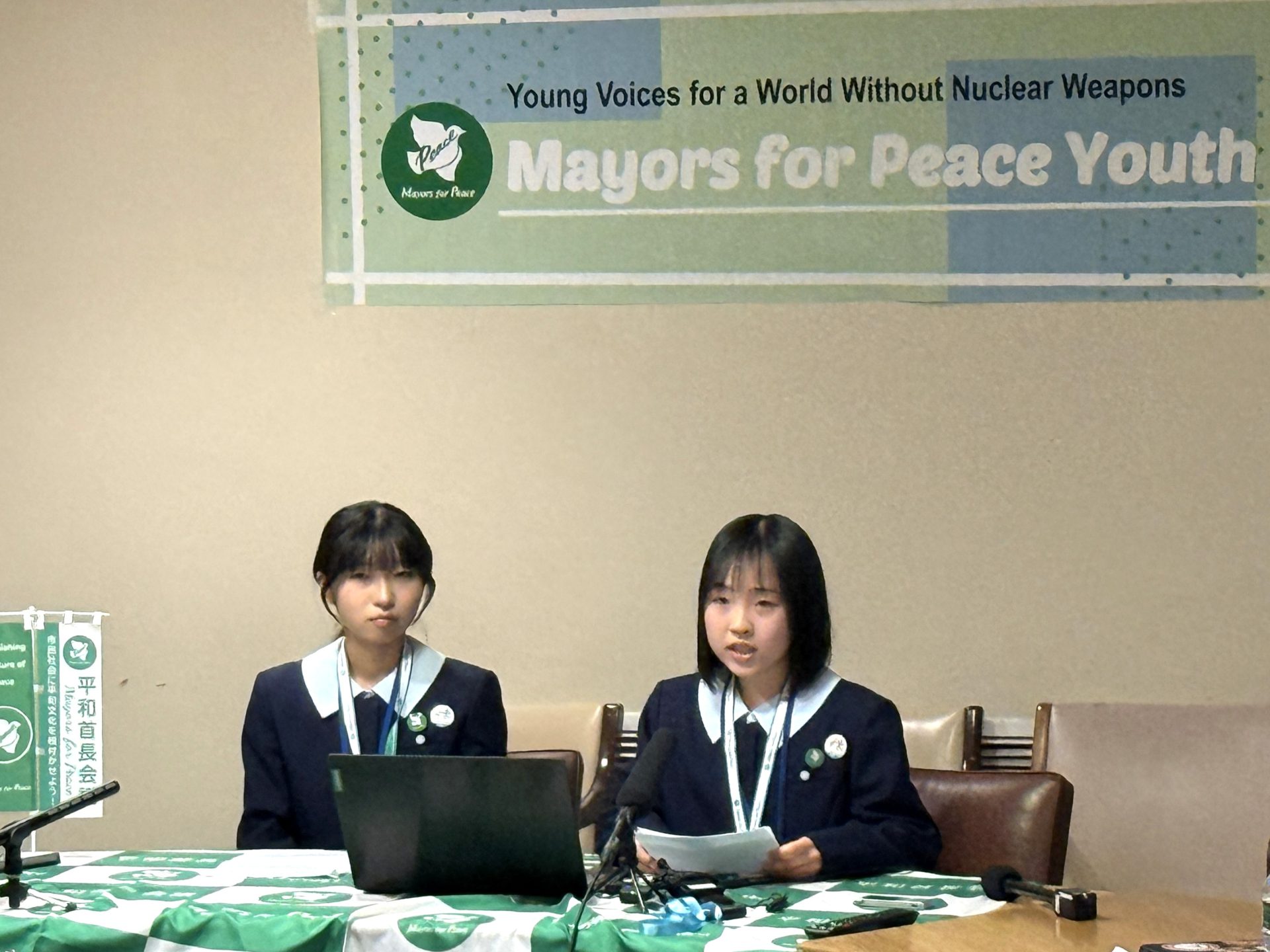
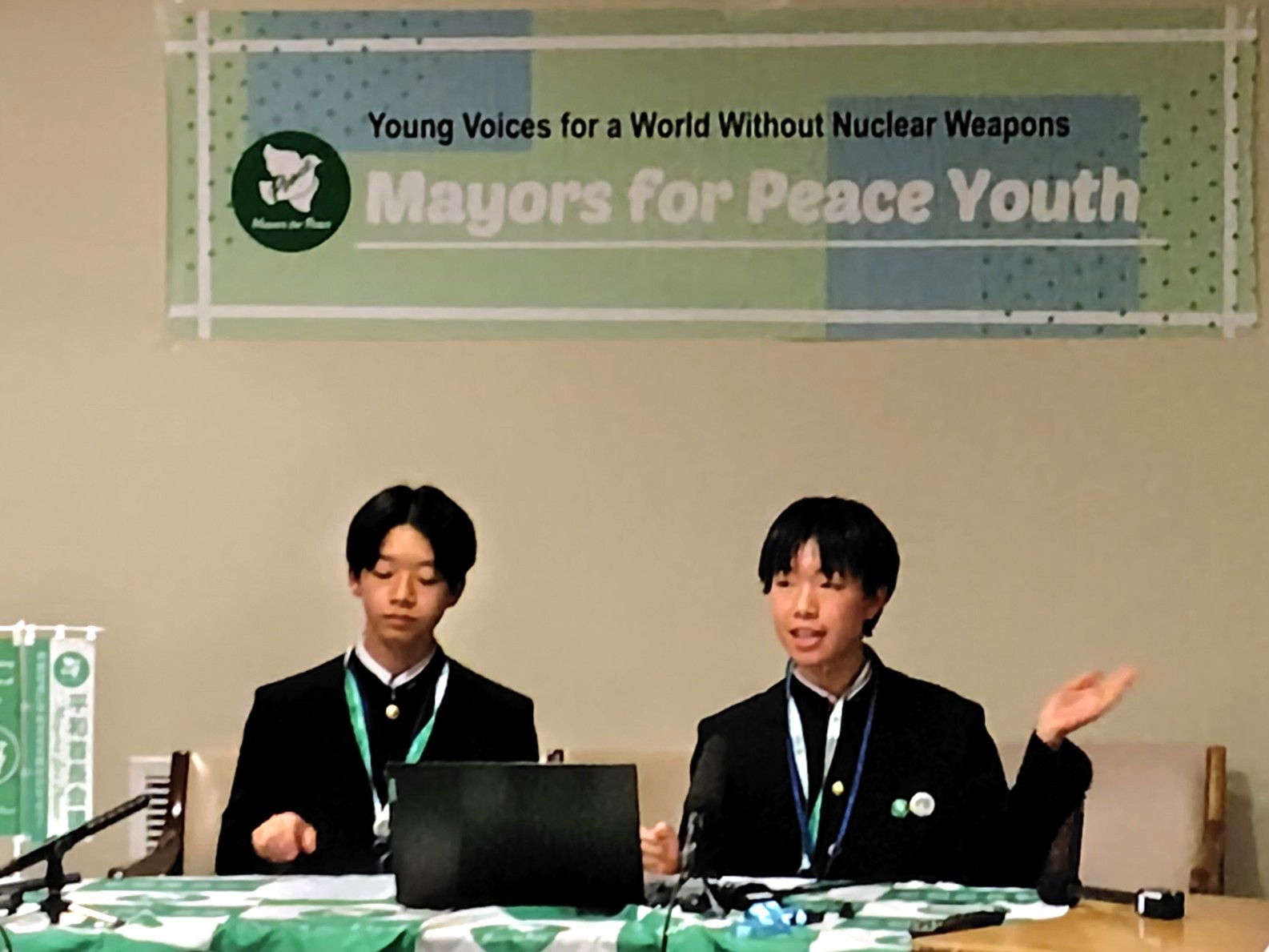
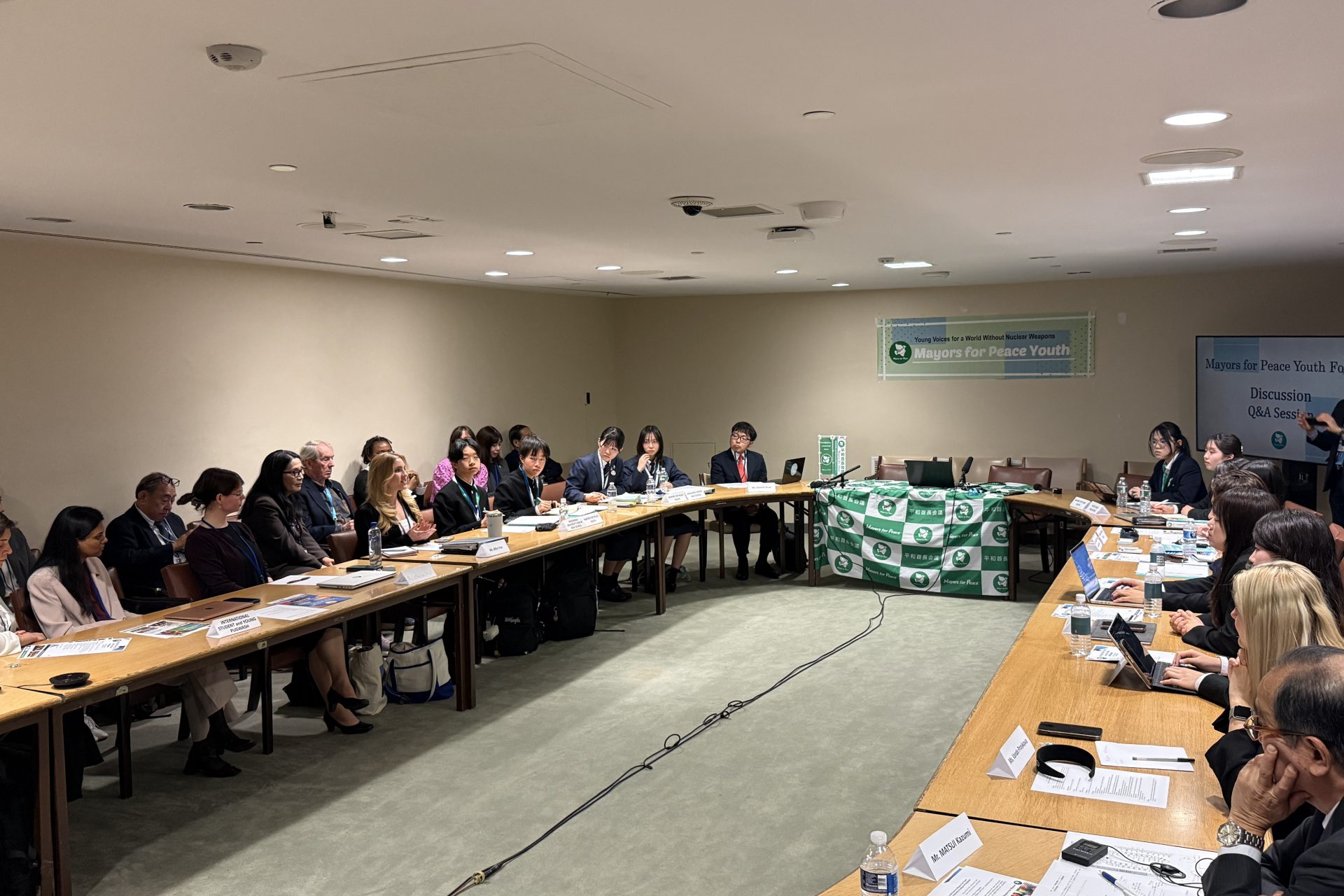
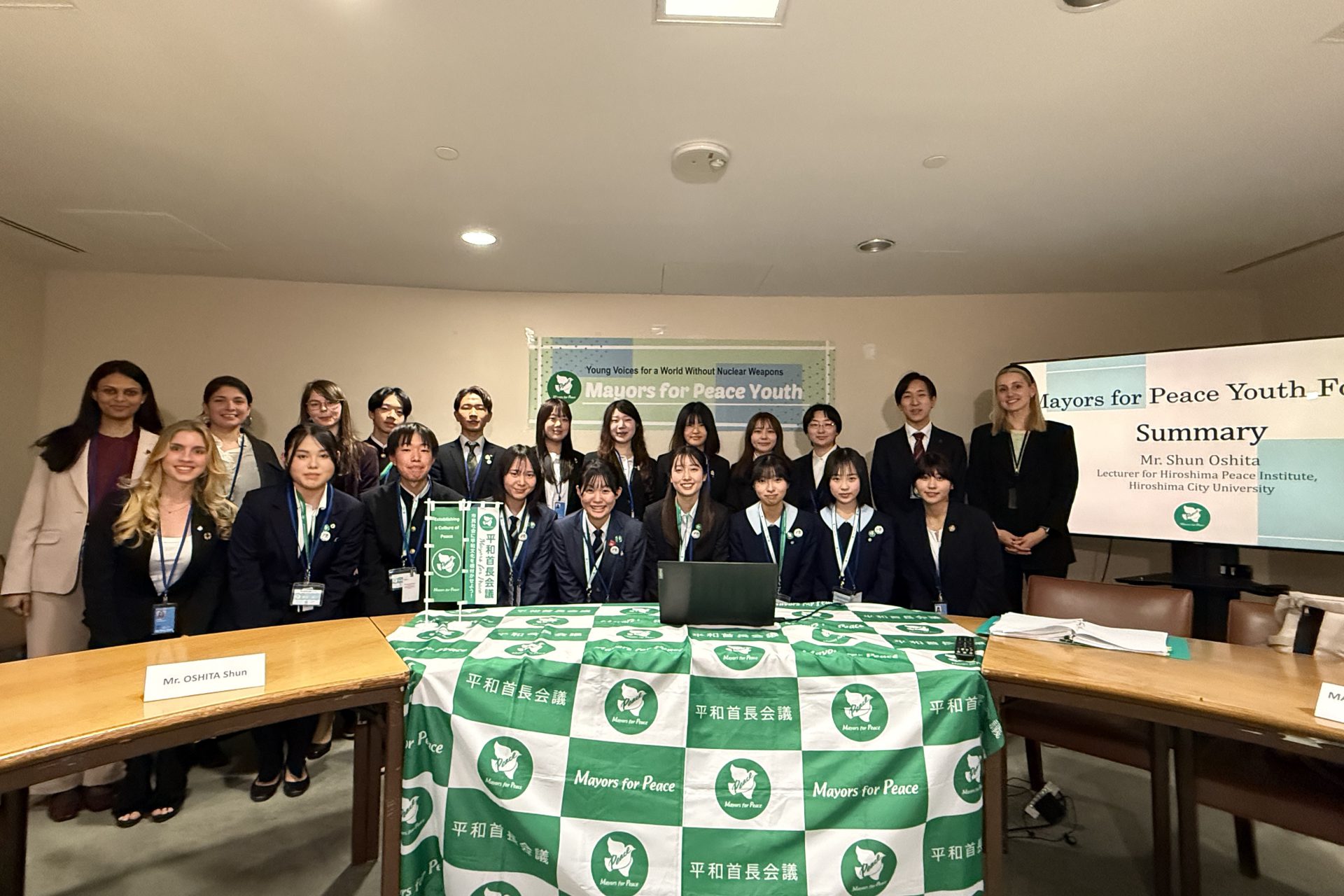
As a side event of the Review Conference, the Mayors for Peace Youth Forum brought together ten groups of young people engaged in peace activities around the world, including the Mayors for Peace Youth delegation. The participants presented their visions and initiatives for achieving a peaceful future free of nuclear weapons from their respective perspectives. During the discussion session following the presentations, participants exchanged views on topics such as creating a platform for sharing peace activities and bridging divisions and addressing challenges in nuclear disarmament. The lively discussion took place between speakers and audience members. Participants from overseas also offered words of encouragement to the youth, noting that “simply being present here is already influencing decision-makers.”
Meeting with Ambassador Ichikawa, Permanent Representative of Japan to the Conference on Disarmament
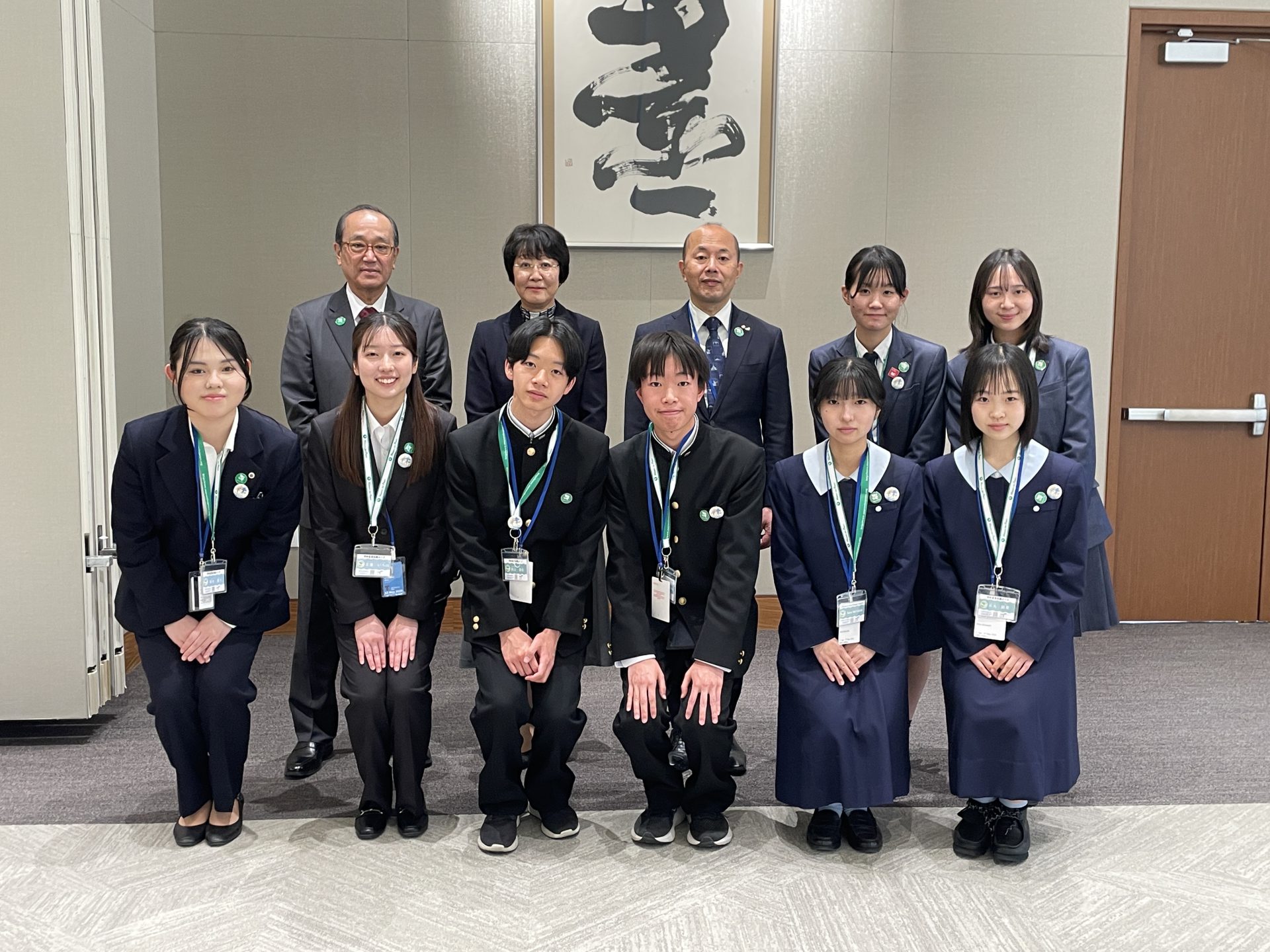
The youth delegation met with Ambassador Ichikawa, Permanent Representative of Japan to the Conference on Disarmament, and the youth representatives introduced the peace activities they had been engaged in to date. During the subsequent Q&A session, the youth participants asked questions about how to engage in dialogue with countries that hold different positions and values, and how progress toward the elimination of nuclear weapons can be made under the framework of nuclear deterrence. In response, Ambassador Ichikawa emphasized the importance of not only focusing on whether one supports or opposes nuclear weapons, but also seeking to understand why people hold those views and engaging in dialogue while identifying common ground. She also encouraged the youth participants by stressing that it is important for younger generations to carry forward the message of peace.
Visit to Pace University
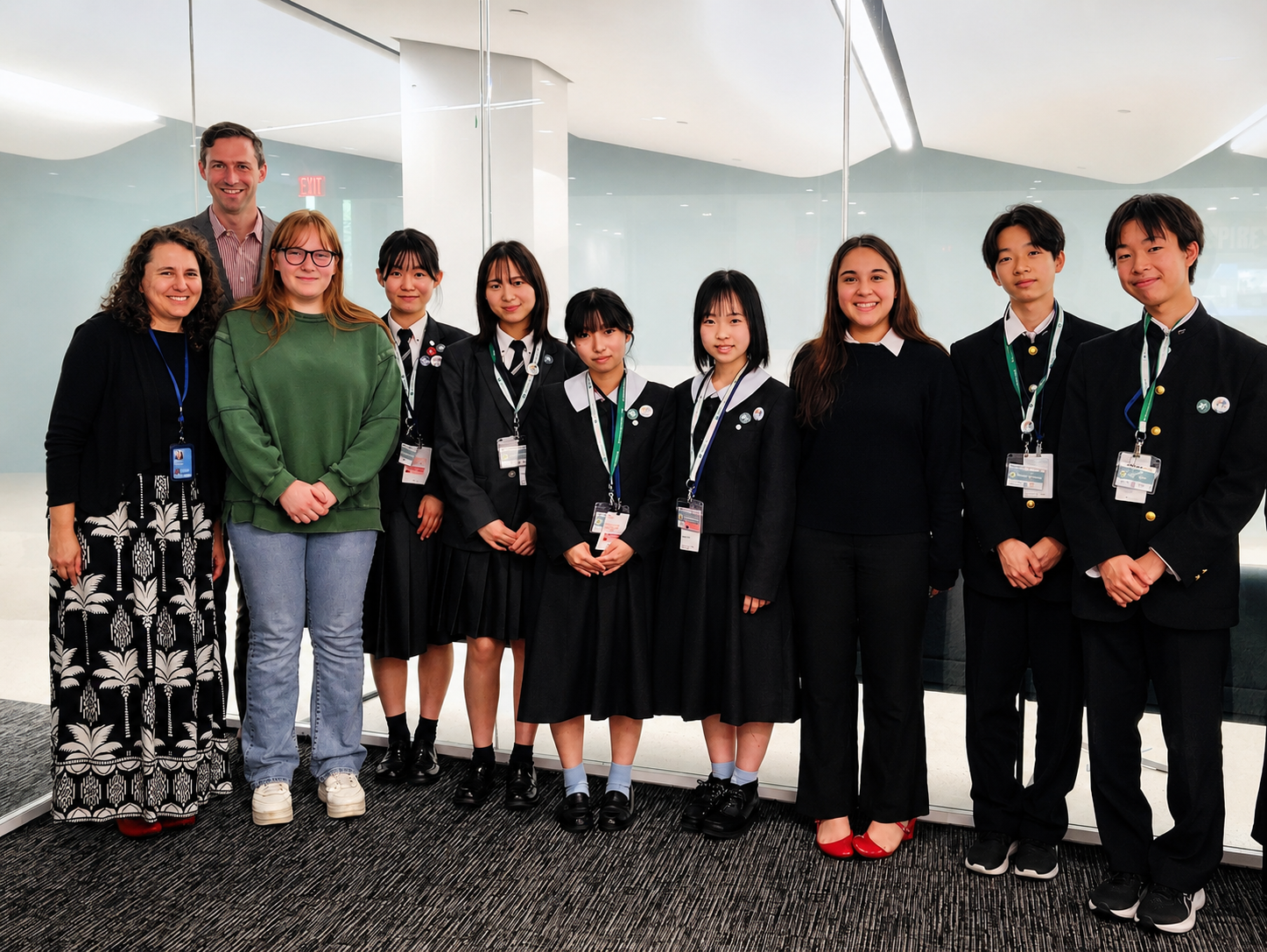
Six high school members of the delegation visited Pace University and met with Professor Matthew Bolton and Professor Emily Welty, both of whom specialize in peace and disarmament studies, as well as two Pace University students. Professor Bolton provided an overview of the university’s work in peace and justice studies and nuclear disarmament, and spoke about the role of young people at the United Nations and the importance of youth participation in addressing global issues. The visit was followed by an exchange of views on topics such as peace education, nuclear disarmament, and university life. For the youth participants, it was a valuable opportunity not only to experience the university’s open and welcoming atmosphere but also to deepen their interaction with students of their own generation.
Visit to the City University of New York (CUNY)
Two university student members visited the City University of New York (CUNY) and participated in a graduate seminar led by Lecturer Jean Krasno, whose research focuses on political decision-making. During the seminar, they attended a lecture on the decision-making of former United Nations Secretary-General Kofi Annan and a student presentation on the political philosophy of former South African President Nelson Mandela. The youth delegates also presented their proposals for achieving the abolition of nuclear weapons. In response, Lecturer Krasno expressed support for their proposals and emphasized the importance of collaboration between non-governmental organizations and governments, citing the adoption of the Treaty on the Prohibition of Nuclear Weapons (TPNW) as an example of such cooperation.
April 29
Attendance at the Mayors for Peace Side Event, “Taking Stock of the NPT: Achievements, Persistent Challenges, and Emerging Opportunities”
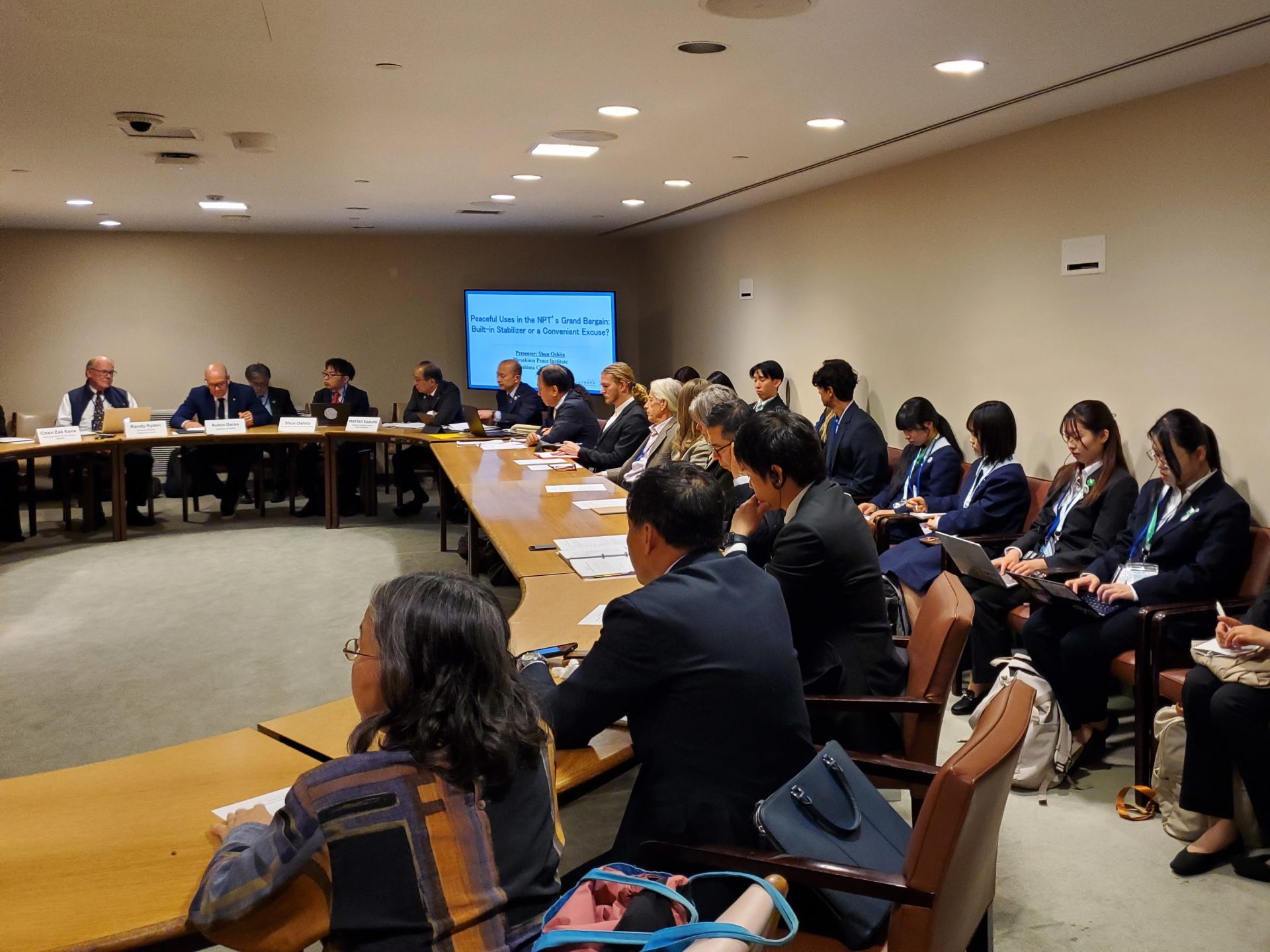
The youth delegates attended speeches delivered by Robin Geiss, Director of the United Nations Institute for Disarmament Research (UNIDIR), United Nations Under-Secretary-General and High Representative for Disarmament Affairs Izumi Nakamitsu, Mayors for Peace President Kazumi Matsui, and Mr. Nakamura, Director-General of the Disarmament, Non-Proliferation and Science Department of Japan’s Ministry of Foreign Affairs, as well as presentations by experts on the Nuclear Non-Proliferation Treaty (NPT). The youth listened attentively while taking detailed notes throughout the event. In particular, they were deeply impressed by Ms. Nakamitsu’s remark that “the adoption of an outcome document at this NPT Review Conference is of critical importance in demonstrating the effectiveness of multilateralism.”
Visit to New York University
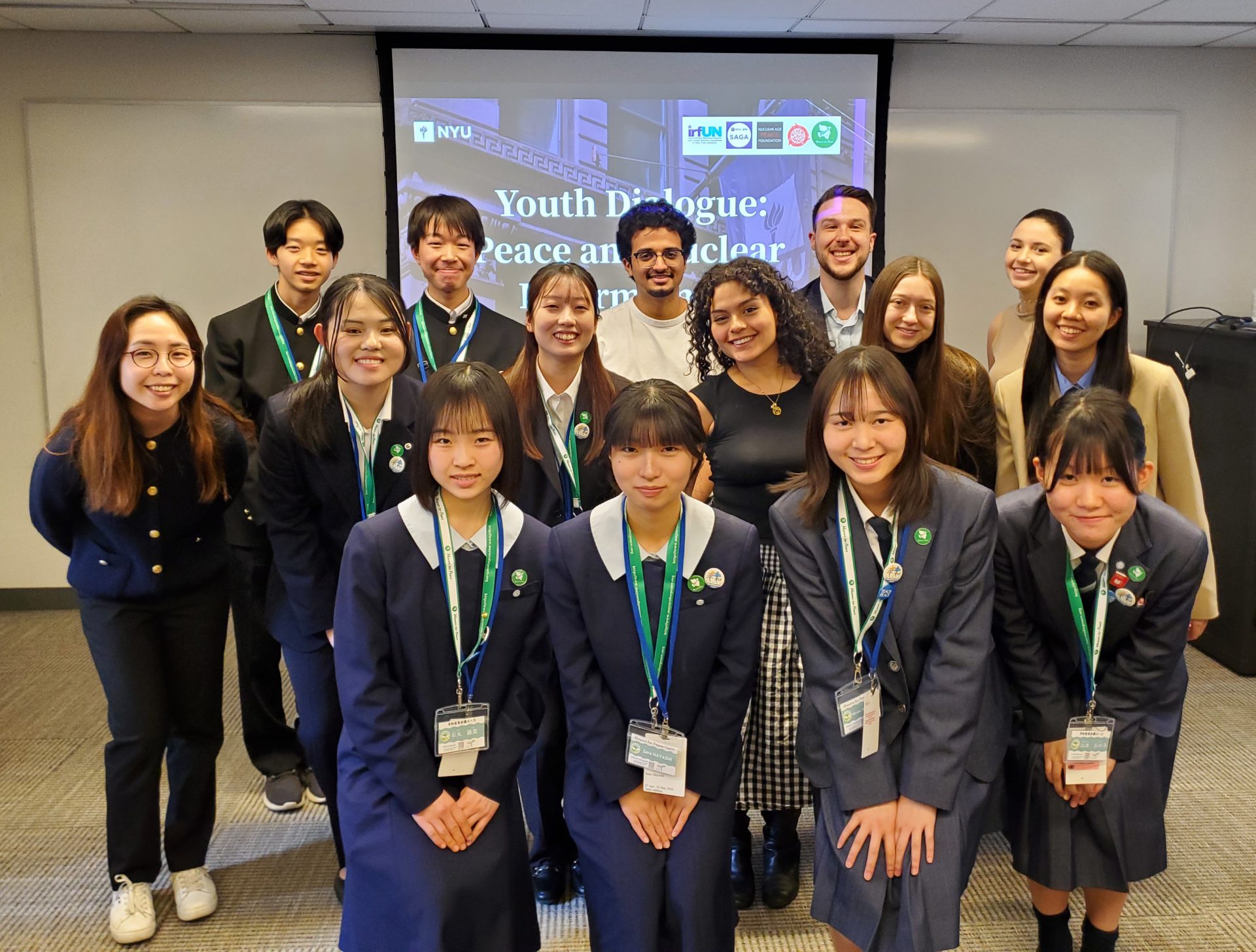
The youth delegates participated in the event “Youth Dialogue on Peace and Nuclear Disarmament” held at New York University. During the first session, representatives of the youth delegation presented their proposals for achieving the abolition of nuclear weapons, while New York University students gave presentations on challenges surrounding nuclear disarmament. The speakers emphasized the importance of youth engagement and the need to build trust among nations. In the second session, participants exchanged views on how to raise awareness of nuclear disarmament among young people across different regions. Discussions highlighted the effectiveness of social media as a tool for engaging students who have little interest in nuclear issues, as well as the role of peace education itself in fostering greater awareness and interest in these topics.
Visit to the United Nations Development Programme (UNDP)
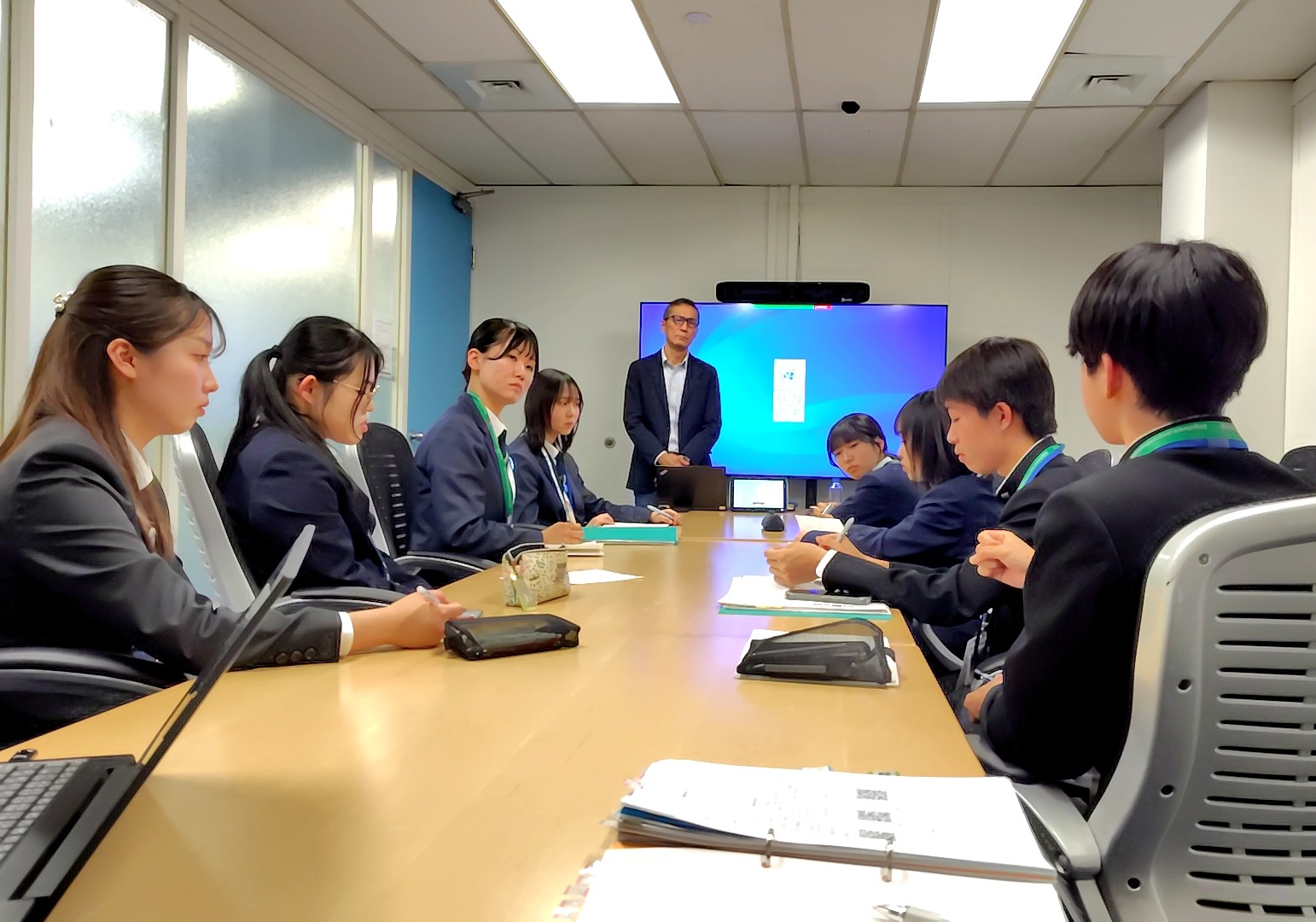
The youth delegates visited the United Nations Development Programme (UNDP), where they received a briefing from Senior Advisor Yamaguchi on the mission and role of UNDP. His presentation highlighted the common ground between Hiroshima’s mission of achieving the abolition of nuclear weapons and UNDP’s development work, including efforts to improve living conditions and address poverty, conflict, and climate change. He also explained the concept of human security, UNDP’s initiatives related to the Sustainable Development Goals (SDGs), and the nature of working within an international organization. During the question-and-answer session, Mr. Yamaguchi discussed the role of international organizations in establishing international rules, agreements, and frameworks, as well as the differences in perspective between government officials and international civil servants. He also emphasized the importance of recognizing difficult challenges for what they are, continuing to seek solutions through cooperation with others, and maintaining a willingness to take on new challenges.
April 30
Visit to the United Nations International School (UNIS)
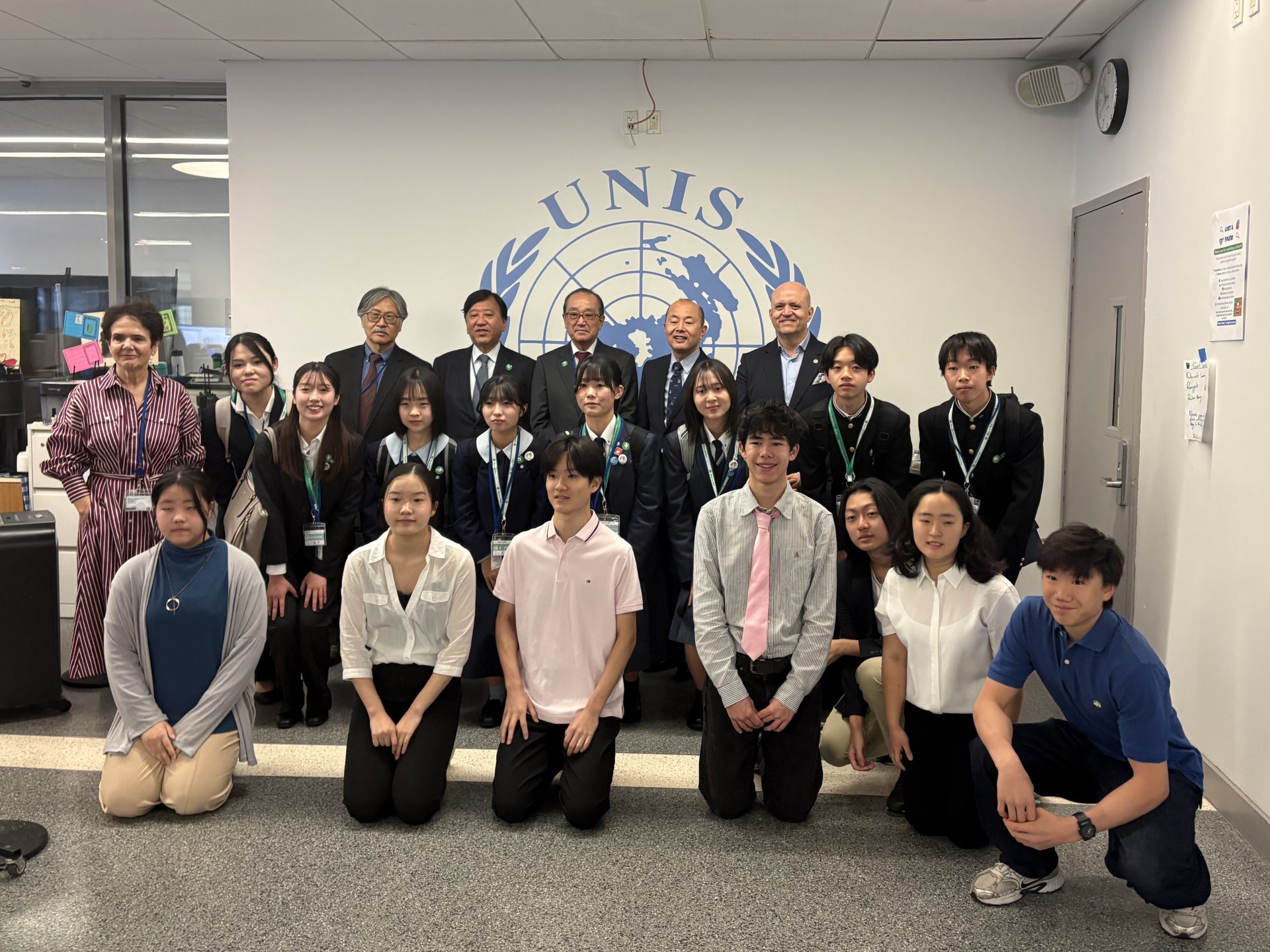
The youth delegates visited the Manhattan campus of the United Nations International School (UNIS). They began the visit by sharing breakfast with UNIS students, engaging in conversations on everyday topics and deepening their mutual understanding. This was followed by a gallery walk, during which the delegates viewed and discussed posters created by students on topics such as the atomic bombings, nuclear power plant accidents, and nuclear weapons development. The session also included opportunities for questions and discussion. At the subsequent Upper School Assembly, presentations and a question-and-answer session were held with the mayors of Hiroshima and Nagasaki, as well as representatives of the youth delegation. The youth representatives introduced peace-related initiatives at their schools, efforts to preserve testimonies of atomic bomb survivors through the use of AI, and activities to share messages of peace at Hiroshima Peace Memorial Park. They emphasized the importance of young people taking action and engaging in dialogue. In response to a question about how young people can contribute to peacebuilding efforts, they spoke from their own experiences about the effectiveness of using social media to raise awareness and share messages. The visit concluded with a peace ceremony presented by fourth-grade elementary school students, featuring welcome cards and a choral performance. Following the visit, the youth delegates shared reflections such as, “Considering issues from the perspectives of people in other countries helped me better understand others,” and “I would like to apply the presentation techniques and organizational methods I learned during the gallery walk to my future activities.” The experience inspired the participants to further strengthen their commitment to future peace initiatives.
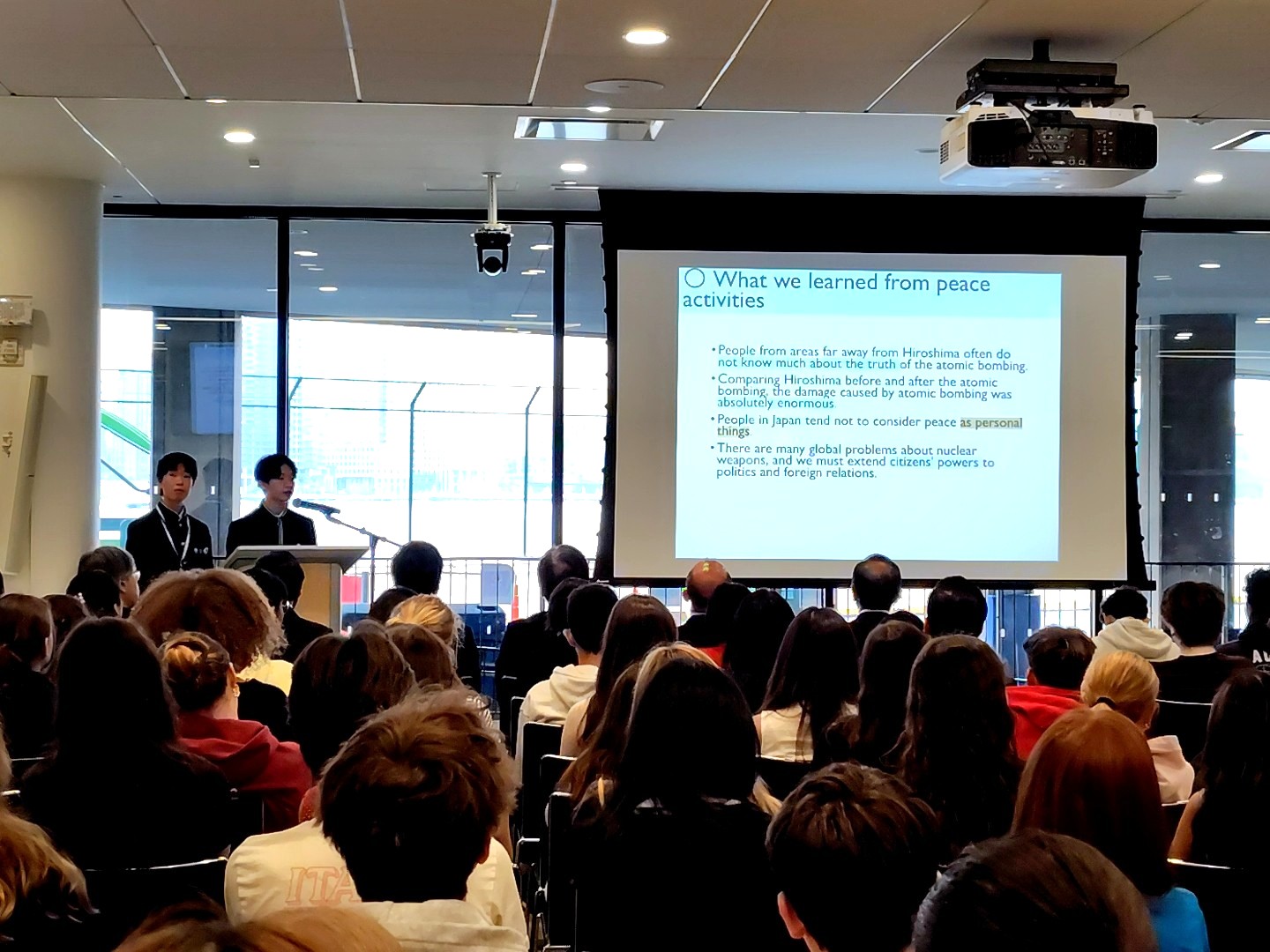
Visit to the United Nations High Commissioner for Refugees (UNHCR)
The youth delegates visited the United Nations High Commissioner for Refugees (UNHCR), where they received a briefing from Senior Communications Officer Deanna Bitetti on the growing number of people who have been forced to flee their homes due to conflict and persecution, as well as on UNHCR’s emergency assistance and protection activities. During the subsequent question-and-answer session, the youth delegates asked about refugee admission systems and the gap between ideals and realities in refugee protection. In response, Ms. Bitetti explained the principles of international law and the roles and responsibilities of individual countries. She also emphasized the importance of paying attention to each person’s circumstances and addressing challenges step by step. Following the visit, one youth delegate commented, “Even when wars are caused by governments or military forces, it is cities and ordinary citizens who ultimately suffer the greatest impact and harm. That is why I believe it is important to continue expanding networks for peace.” The visit provided a valuable opportunity for the participants to deepen their understanding of peacebuilding and humanitarian assistance.
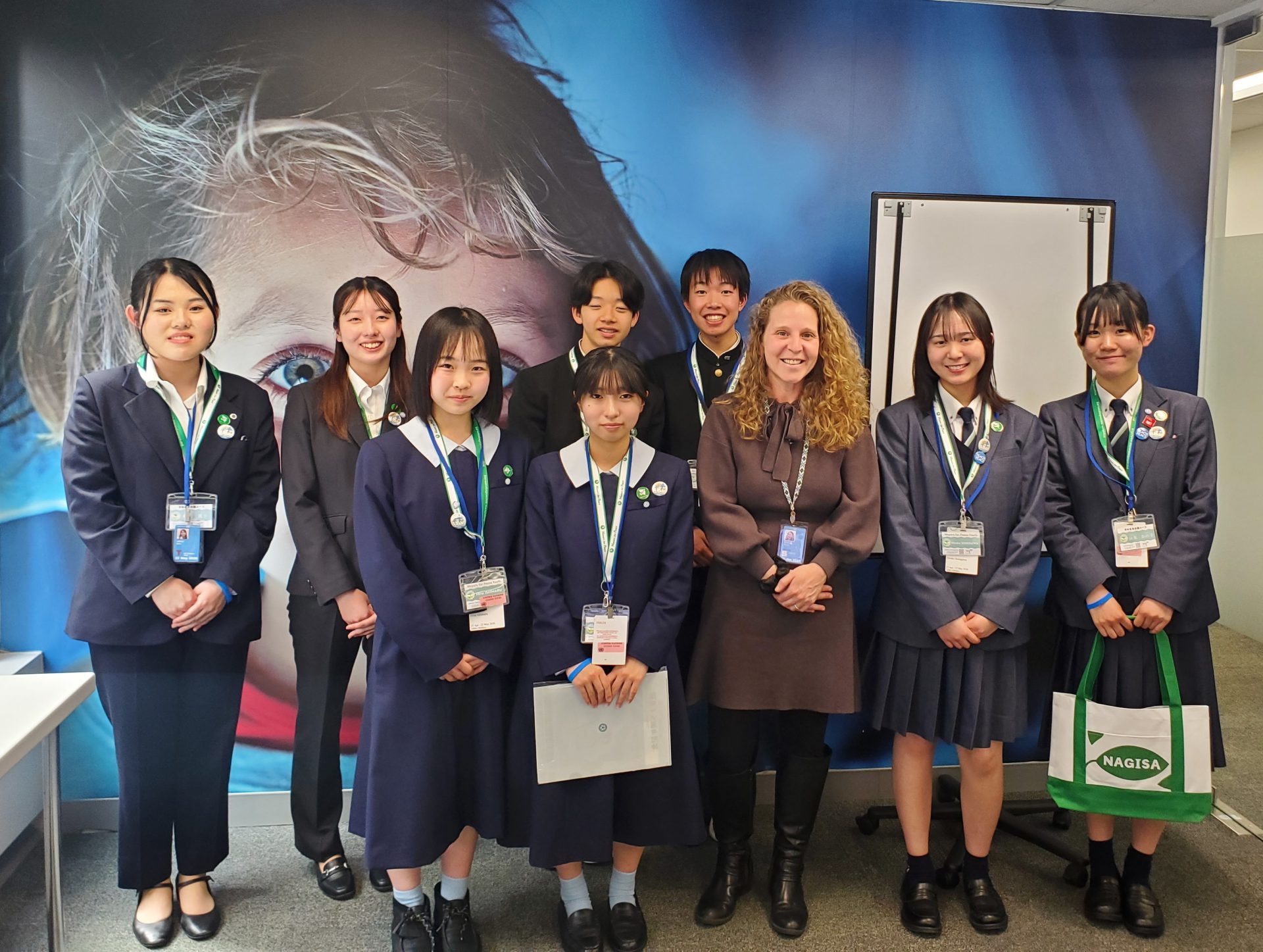
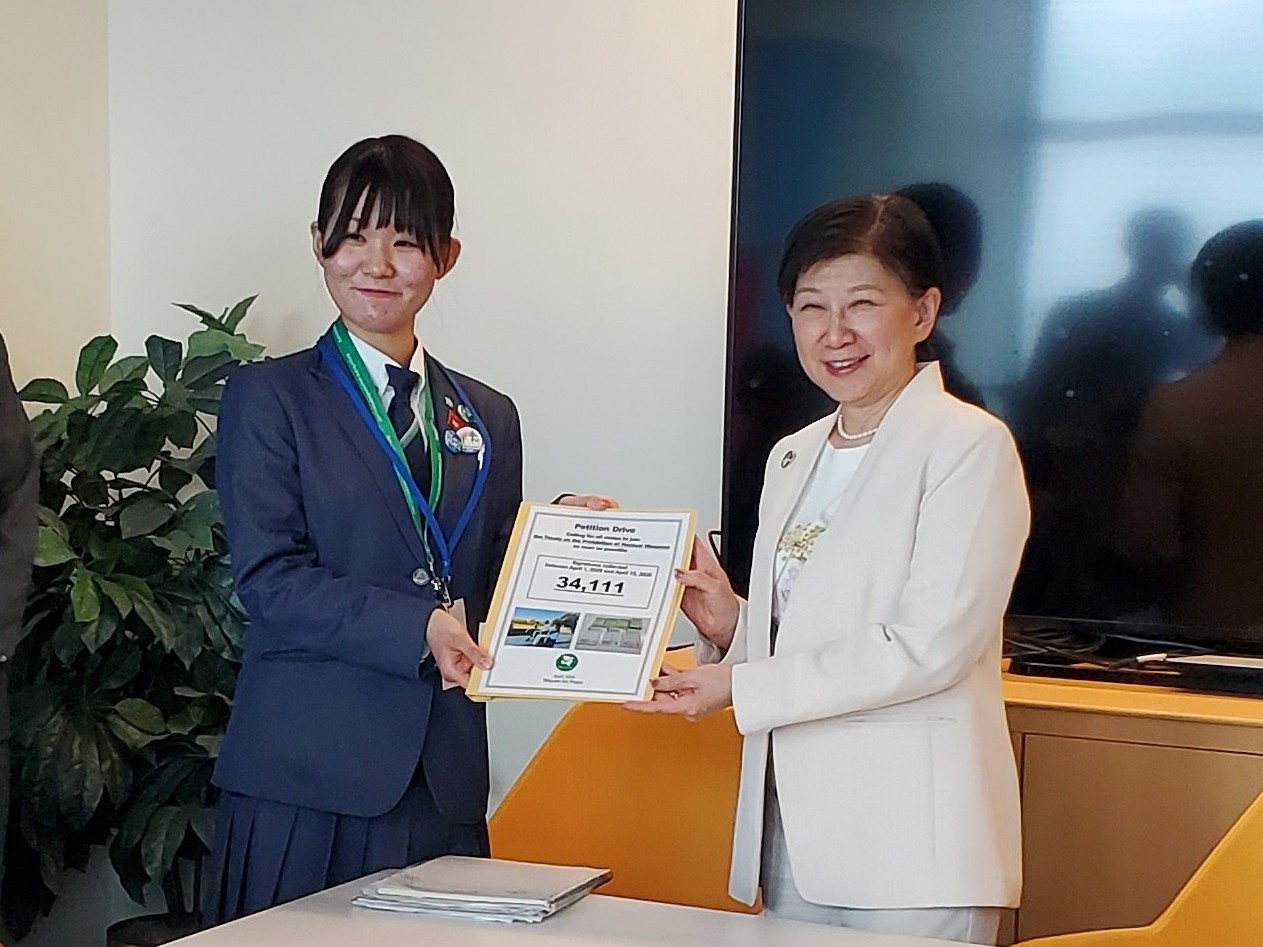
Meeting and delivery of petition to Ms. Nakamitsu, UN Under-Secretary-General and High Representative for Disarmament Affairs
A representative of the youth delegation presented UN Under-Secretary-General Nakamitsu with a list of approximately 34,000 signatures calling for all states to join the Treaty on the Prohibition of Nuclear Weapons at the earliest date. During the subsequent question-and-answer session, the youth delegates asked how they should engage with people who hold different views while promoting efforts toward the abolition of nuclear weapons, and how they could effectively communicate their voices and concerns to society. In response, Ms. Nakamitsu explained that nuclear disarmament is an issue closely linked to security and that a broad range of knowledge and understanding is therefore essential. She also emphasized the importance of continuing dialogue with people who hold different perspectives. Furthermore, she highlighted the significance of expressing one’s views through democratic processes as a means of influencing society. The meeting provided the youth delegates with a valuable opportunity to receive a lot of hints and learning.
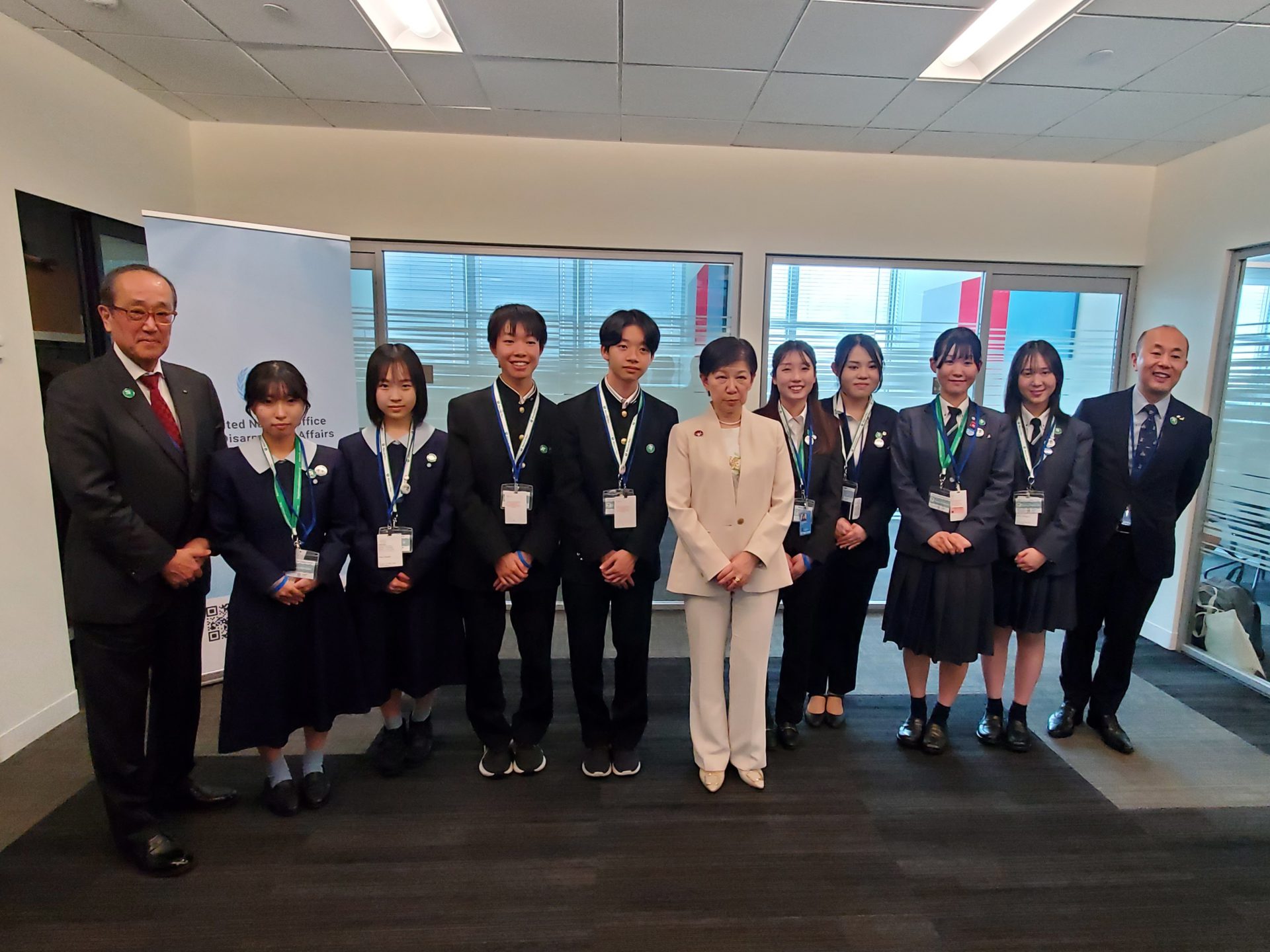
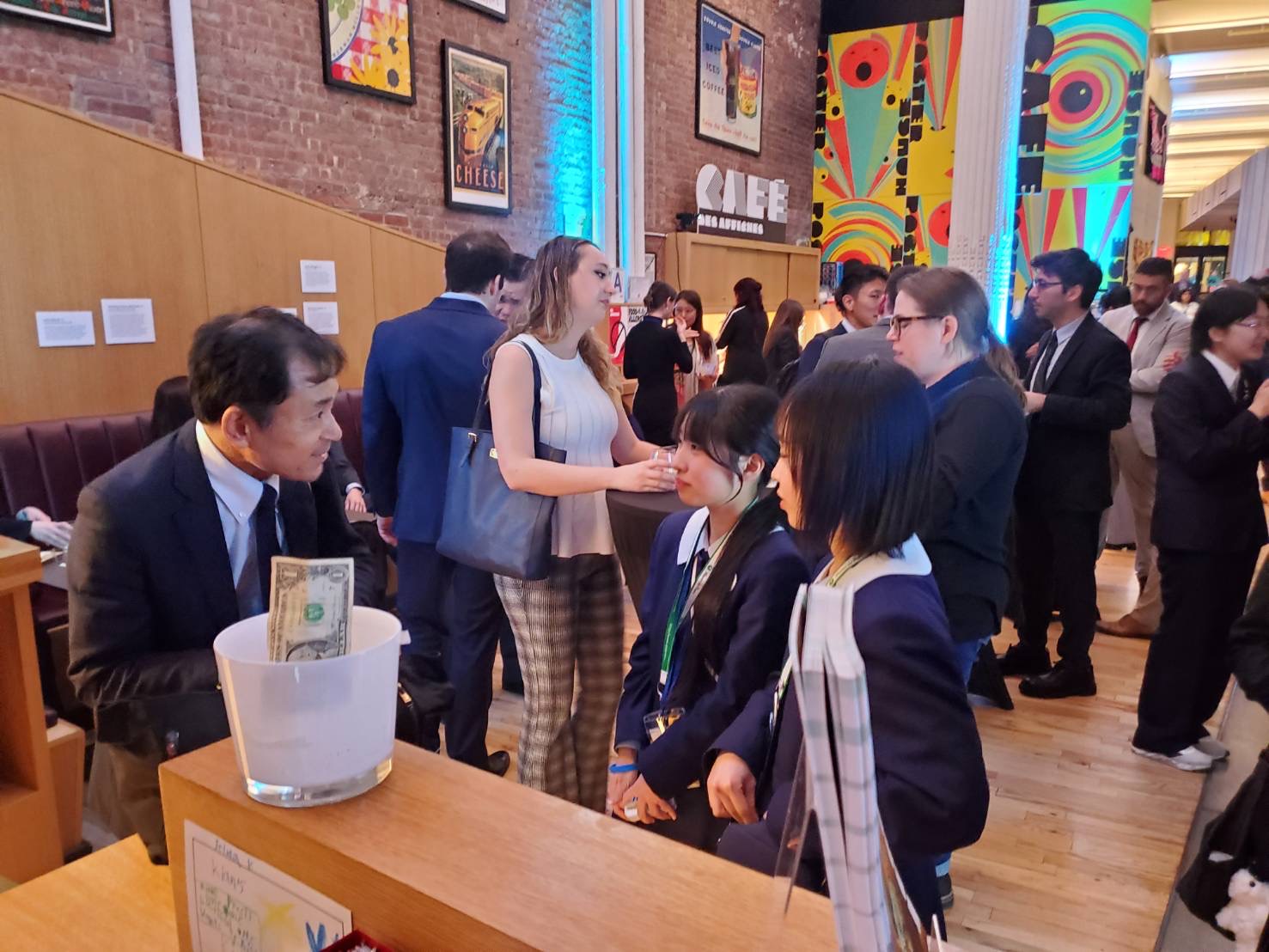
Attendance at the Reception Co-hosted by the United Nations Office for Disarmament Affairs (UNODA), Poster House, and the Government of Japan
The reception was attended by approximately 100 guests, including Ambassador Kazuyuki Yamazaki, Permanent Representative of Japan to the United Nations, and United Nations Under-Secretary-General and High Representative for Disarmament Affairs Izumi Nakamitsu. In addition to the youth delegates, participants included young people who had presented at the Mayors for Peace Youth Forum, students and university representatives studying peace and nuclear disarmament in New York, and members of non-governmental organizations (NGOs). The event opened with remarks by Ambassador Yamazaki and Ms. Nakamitsu. During the first half of the program, a panel discussion featuring artists was held under the theme, “Exploring the Power of Art and Creative Expression in Advancing Nuclear Disarmament.” The second half of the reception provided an opportunity for networking and exchange. The youth delegates engaged in discussions with other students and participants, strengthening connections with peers who share an interest in peace and nuclear disarmament.
May 1
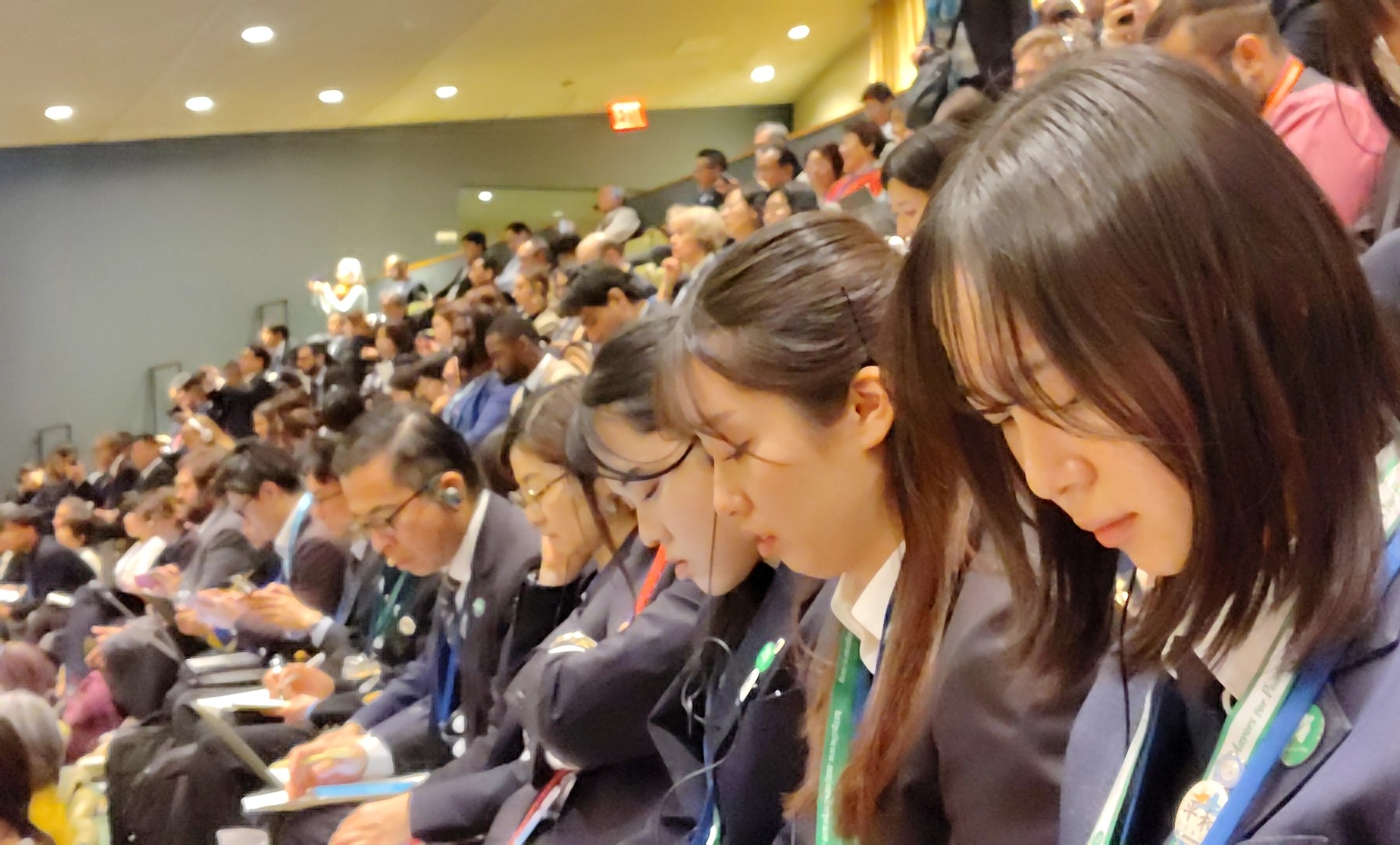
Attendance at the NGO Session of the 11th NPT Review Conference
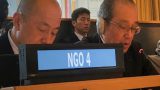
The youth delegates attended the NGO Session of the 11th NPT Review Conference, where civil society organizations from around the world, including Mayors for Peace and atomic bomb survivors’ organizations, delivered messages to government representatives on behalf of citizens. During the session, the delegates listened to speeches by representatives of the Japan Confederation of A- and H-Bomb Sufferers Organizations (Nihon Hidankyo), Mayors for Peace President Kazumi Matsui, Vice President Shiro Suzuki, the Governor of Hiroshima Prefecture, and the Vice Governor of Nagasaki Prefecture, among others. Following the session, the youth delegates shared their reflections. One youth delegate commented, “I was reminded that nuclear issues are not problems for any particular country alone, but challenges that all of humanity must confront together.” Another noted, “We need to consider new approaches to security that do not rely on nuclear deterrence. To achieve this, it is essential to foster a culture of peace at the grassroots level and embed it within society.”
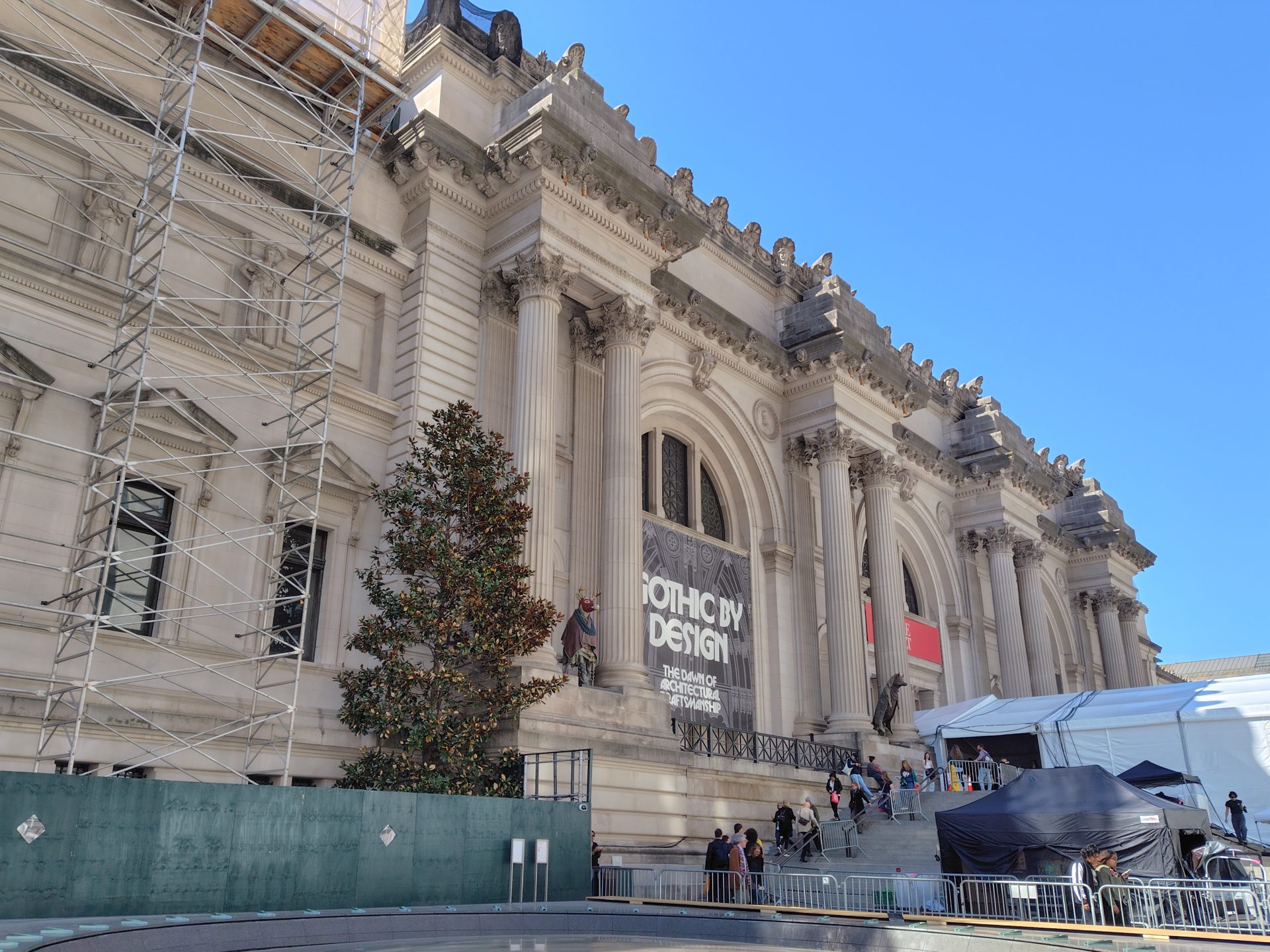
City Tour and Cultural Visits
The youth delegates visited several sites in New York City, including the Metropolitan Museum of Art and Chelsea Market. Through these visits, they gained a deeper understanding of New York’s history, culture, and diversity of values. The experience also provided insights into the use of urban spaces and the lifestyles of people living in the city.
Reflections on the Mayors for Peace Youth Delegation
- Through this delegation, I was confronted with the harsh realities of the current international situation and was led to reflect deeply on fundamental challenges, including the limitations of dialogue and the question of how nations can be encouraged to see reducing nuclear weapons as a safer option. This experience reinforced my belief that our generation, which will shape the future, must sincerely engage with these difficult issues and continue to raise awareness from Hiroshima, the atomic-bombed city, about the dangers of nuclear weapons.
- Through the many people I met during this delegation, I came to realize once again that my volunteer activities as a guide at the Hiroshima Peace Memorial Park had primarily been directed toward people who visited Hiroshima with an interest in peace. Because not everyone in the world is concerned about nuclear weapons or peace-related issues, I felt it is important to reach out beyond Hiroshima, raise awareness among a wider audience, and expand opportunities for dialogue.
- Through this delegation, my perception of peace, nuclear weapons, and international relations changed significantly. Hearing directly from United Nations staff members and professionals working in international organizations about the realities of their work and their personal experiences gave me an opportunity to think deeply about my future career. The world, which had previously seemed distant and abstract, now feels much closer to me. This experience strengthened my desire to continue learning about international relations and to contribute to the world in the future.
- Through this delegation, I learned the importance of thinking critically while taking action. The United Nations staff members and professionals working in international organizations whom I met during the delegation were all confronting various challenges and continuing to act, each through a different approach. I came to realize that their actions were supported by extensive learning and deep reflection. Going forward, I hope to remain interested in a wide range of issues, continue learning, and place great importance on thinking for myself and taking action.